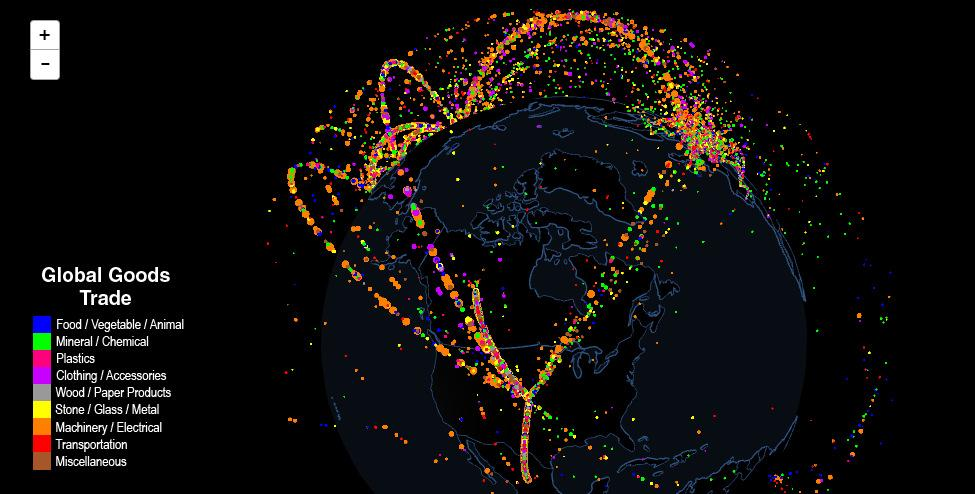
Global trade reached a record $33 trillion in 2024 (UNCTAD, 2025).
At first glance, globalization appears remarkably resilient. Goods, services, capital, and data continue to move across borders at unprecedented scales.
Yet beneath those headline figures, policymakers are increasingly redesigning economic relationships around security, resilience, and strategic autonomy. Trade is expanding, but trust is becoming more selective.
The result is not the end of globalization.
It is the fragmentation of globalization.
Why This Matters
For three decades, economic policy largely operated on a common assumption: deeper integration would generate faster growth, greater efficiency, and broader prosperity.
Today, that assumption is being reassessed.
The IMF estimates that severe geoeconomic fragmentation could reduce global output by up to 7% of GDP in some scenarios, with emerging economies facing particularly significant costs (IMF, 2023; IMF, 2024). Meanwhile, the WTO estimates that a division of the global economy into competing blocs could reduce long-run global real GDP by nearly 5% (WTO, 2023).
For policymakers, businesses, and citizens, fragmentation raises fundamental questions about:
- Growth
- Resilience
- Economic security
From Hyper-Globalization to Strategic Globalization
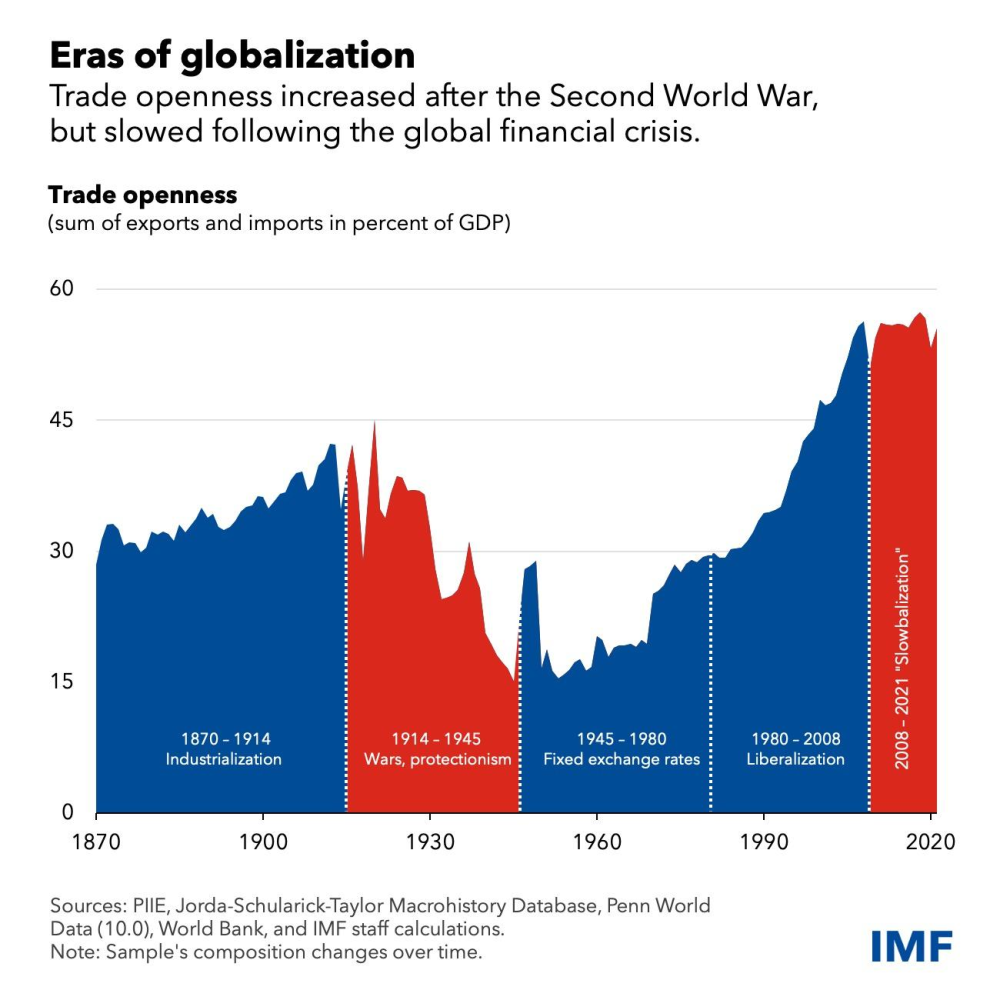
Between 1990 and 2008, world merchandise trade grew from roughly 39% to 61% of global GDP (World Bank, 2025).
China's accession to the WTO in 2001 accelerated global supply-chain integration. Multinational firms optimized production across borders, prioritizing efficiency and cost reduction.
The COVID-19 pandemic exposed vulnerabilities in these highly interconnected systems. Shortages of semiconductors, medical supplies, and critical inputs revealed the risks of concentrated supply chains.
Geopolitical tensions further intensified concerns:
- The United States introduced export controls on advanced semiconductor technologies.
- The European Union launched initiatives to strengthen strategic industries.
- China accelerated efforts to reduce dependence on foreign technologies.
- India expanded production-linked incentive programs across multiple sectors (OECD, 2024; IMF, 2024).
The focus of economic policy began shifting from efficiency alone toward resilience.
What the Data Shows
Several indicators highlight the changing structure of globalization:
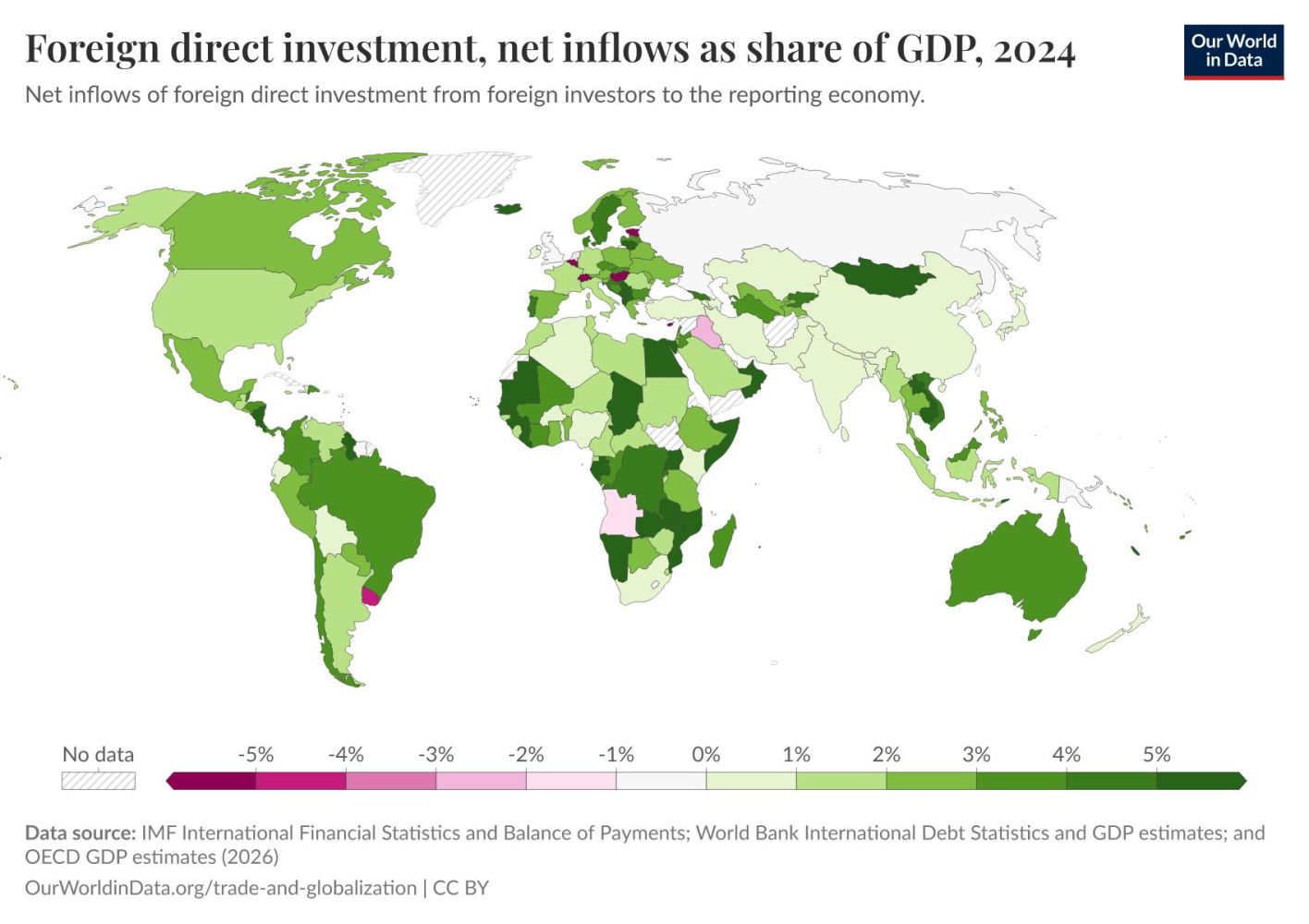
- Global foreign direct investment flows fell by 2% in 2024, reaching approximately $1.3 trillion, despite strong growth in several emerging markets (UNCTAD, 2025).
- Cross-border trade remains robust, but patterns are changing. IMF research shows that trade between geopolitically aligned countries has grown faster than trade between countries with greater political distance since Russia's invasion of Ukraine in 2022 (IMF, 2024).
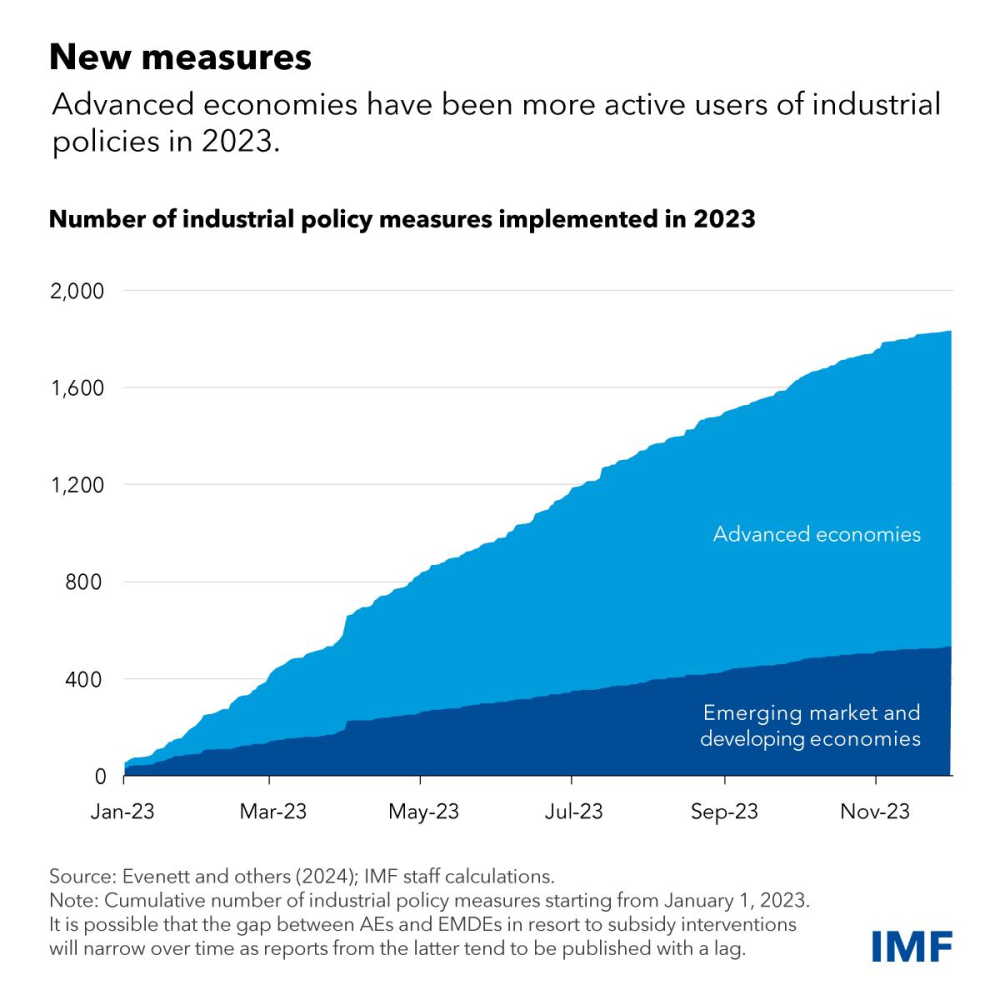
- Industrial policy has also returned on a significant scale. According to the IMF, governments worldwide implemented more than 2,500 industrial policy interventions in 2023, nearly three times the level recorded in 2019 (IMF, 2024).
Public subsidies for semiconductors, electric vehicles, renewable energy, and strategic minerals have expanded across major economies.
At the same time, supply chains are becoming more diversified. Concepts such as "friend-shoring," "near-shoring," and "China-plus-one" have entered mainstream economic strategy discussions (OECD, 2024).
The Evolution of Globalization
Globalization 1.0 → Efficiency
Globalization 2.0 → Efficiency + Security
Policy Perspectives
Perspective A: Fragmentation as Risk Management
Supporters argue that recent shocks exposed excessive dependence on concentrated supply chains. From this perspective, strategic diversification improves resilience.
Policymakers point to disruptions in semiconductors, energy markets, pharmaceuticals, and critical minerals as evidence that national security and economic security are increasingly interconnected. The OECD notes that critical supply-chain disruptions can generate substantial economic spillovers across sectors and countries (OECD, 2024).
Advocates therefore support targeted industrial policy, domestic production capacity, and strategic stockpiles.
The objective is not necessarily less trade, but more secure trade.
Perspective B: Fragmentation as Economic Inefficiency
Critics caution that excessive fragmentation may undermine many benefits globalization has historically delivered. Specialization and comparative advantage helped reduce production costs, improve productivity, and expand consumer choice.
The IMF estimates that restrictions on technology transfer and trade could generate significant productivity losses, particularly for developing economies that depend on access to global markets and innovation networks (IMF, 2023).
The World Bank similarly warns that slower trade integration could weaken long-term growth prospects for lower-income economies seeking to close income gaps with advanced countries (World Bank, 2025).
Evidence suggests that resilience and efficiency often exist in tension rather than harmony.
A Systems Perspective
Fragmentation affects multiple stakeholders simultaneously.
| Stakeholder | Potential Benefits | Potential Costs |
|---|---|---|
| Governments | Greater strategic autonomy | Higher fiscal costs |
| Businesses | Reduced geopolitical risk | Higher production expenses |
| Workers | Domestic investment opportunities | Potential price increases |
| Consumers | More reliable supply chains | Reduced affordability |
| Developing Economies | New investment opportunities from diversification | Risk of exclusion from major trade blocs |
The challenge is that policies designed to solve one problem often create another:
- Subsidies can strengthen domestic industries but distort competition.
- Diversified supply chains can improve resilience but increase costs.
- Export controls can protect strategic technologies but reduce knowledge diffusion.
These trade-offs make fragmentation fundamentally a governance challenge rather than merely an economic one.
Global Comparisons
Different economies are responding in different ways:
- The United States has emphasized strategic industrial policy through semiconductor and clean-energy investments.
- The European Union has focused on "open strategic autonomy," seeking resilience while maintaining openness to trade.
- China continues pursuing technological self-reliance alongside global export competitiveness.
- India has expanded manufacturing incentives and infrastructure investment while remaining integrated with global markets.
Despite differing approaches, a common theme is emerging: economic policy is increasingly influenced by security considerations. The distinction between economic and strategic policymaking is becoming less clear.
Sources
- International Monetary Fund (IMF), Geoeconomic Fragmentation and the Future of Multilateralism (2023-2025)
- United Nations Conference on Trade and Development (UNCTAD), Global Trade Update (2025)
- World Trade Organization (WTO), World Trade Report (2023)
- World Bank, Global Economic Prospects (2025)
- Organisation for Economic Co-operation and Development (OECD), Economic Outlook (2024)
Additional references reviewed: 60+ sources.