Delhi consumed 239.63 million units of electricity at public electric vehicle charging stations.
The capital has successfully transitioned to the nation's most active EV charging hub.
Yet beneath this headline energy consumption, a different governance reality is emerging.
Importance
Vehicular emissions contribute approximately 23% of Delhi's winter air pollution (DriveSpark, 2026). According to the World Health Organisation, the city's average annual fine particulate matter exposure regularly exceeds recommended safe thresholds (Law.asia, 2026).
Decarbonising transport is not merely an environmental goal. It is an urgent public health imperative.
With two-wheelers constituting 67% of Delhi's active vehicle population, the design of the state's transition strategy will directly shape the city's environment for decades (Hindustan Times, 2026).
Background
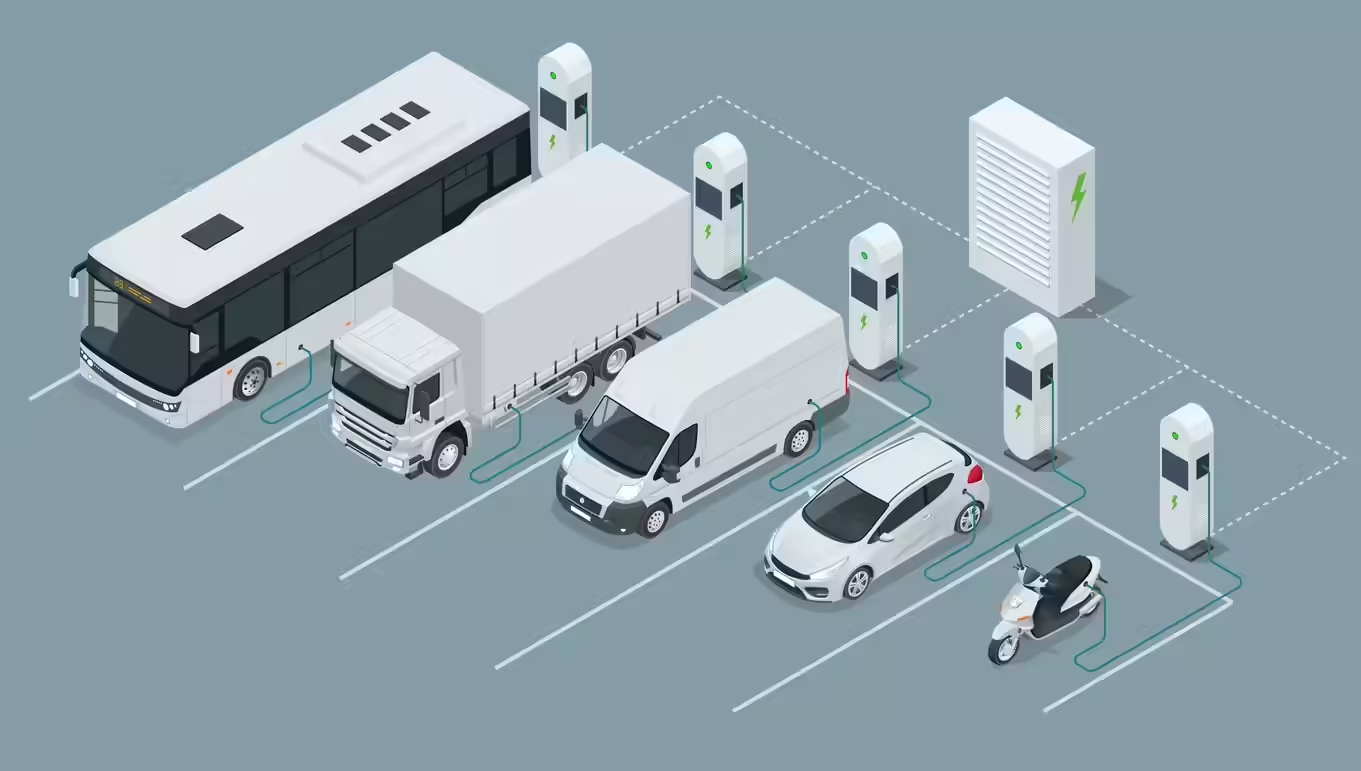
The original Delhi Electric Vehicle Policy of 2020 expired in August 2023 following multiple administrative extensions (Hindustan Times, 2026). That initial framework targeted a 25% share of electric vehicles in new registrations by 2024 (IRADe, 2019).
However, the state fell short of its ambitions. It reached an estimated market penetration of 13% to 14% by early 2026 (Hindustan Times, 2026).
To bridge this gap, the government approved the Delhi Electric Vehicle Policy 2026 on June 29, 2026 (Rediff, 2026). Valid until March 31, 2030, this new framework marks a fundamental policy reform, shifting from soft subsidies to hard mandates (Law.asia, 2026).
It allocates Rs 3,954.25 crore to drive systematic fleet transitions across the capital (The Hindu, 2026).
Policy Components
| Policy Component | Budget Allocation |
|---|---|
| Purchase Subsidies | Rs 1,236.25 Crore |
| Scrapping Incentives | Rs 1,718.00 Crore |
| Charging Infrastructure | Rs 1,000.00 Crore |
| Total | Rs 3,954.25 Crore |
What the Data Shows
While Uttar Pradesh leads India in absolute registered electric vehicles with 15.2 lakh units, Delhi focuses heavily on high-utilisation commercial fleets (ET Auto, 2026). Out of India's 80 lakh registered electric vehicles, Delhi accounts for approximately 4.8 lakh (ET Auto, 2026).
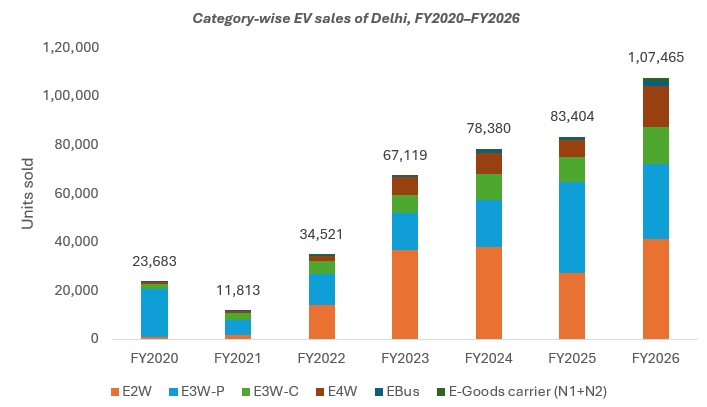
Total electric vehicle registrations in Delhi grew from 83,512 in the 2024–2025 financial year to 1.07 lakh in 2025–2026 (ET Auto, 2026).
However, a closer institutional analysis of the two-wheeler segment reveals a massive implementation challenge. During the past two financial years, over one million two-wheelers were registered in Delhi (Hindustan Times, 2026). Only 68,275 of these were electric, representing a modest 6.75% adoption rate (Hindustan Times, 2026).
To push these numbers upward, EV Policy 2.0 introduces aggressive regulatory cut-offs (Drishti IAS, 2026).
- From January 1, 2027, only electric three-wheelers and N1 commercial trucks can be registered in Delhi (Drishti IAS, 2026).
- From April 1, 2028, new registrations of petrol and CNG-powered two-wheelers will be completely discontinued (EV Infrastructure News, 2026).
Policy Perspectives
Perspective A: The Supporting View
Supporters of the regulation argue that hard mandates are essential to break the status quo and address chronic air pollution.
The policy provides robust upfront purchase subsidies to cushion early economic transitions. Electric two-wheeler buyers receive Rs 10,000 per kWh up to Rs 30,000 in Year 1, alongside a 100% waiver of road taxes for vehicles priced under Rs 30 lakh (DriveSpark, 2026).
Linking these incentives to the scrapping of older BS-IV vehicles prevents the simple addition of new vehicles to an already congested road network (EV Infrastructure News, 2026).
Perspective B: The Critical View
Critics argue that the policy's aggressive timelines place an unfair financial burden on lower-income commercial operators (Drishti IAS, 2026). Mandating a shift for auto-rickshaw drivers and delivery workers could cause severe financial stress without accessible vehicle financing (Insights IAS, 2026).
Infrastructure gaps also remain a critical governance challenge. The city aims to expand from 10,000 public chargers to 32,000 by 2030 (The Tribune, 2026). However, existing installations are highly uneven (EPW, 2026).
Global Comparison
Oslo, Norway, offers a valuable benchmark for structural mobility transitions.
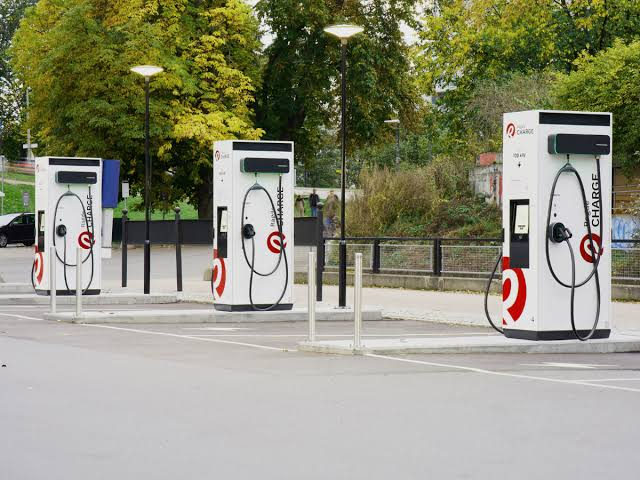
In December 2025, battery electric vehicles captured 97.6% of all new passenger car sales in Norway (OFV, 2026). For the full year of 2025, the market share stood at 95.9% (OECD, 2026).
Norway achieved this through a progressive polluter-pays tax system, weight-based registration duties, and a long-standing exemption on value-added tax for electric vehicles (WCShipping, 2025).
However, Oslo's model relies on unique systemic advantages. Norway's grid is powered by 95% renewable hydroelectric energy, meaning its transition is genuinely zero-emission (WCShipping, 2025).
In contrast, Delhi relies heavily on coal-fired thermal power. This means the city is currently shifting emissions from urban tailpipes to regional power generation hubs (Indian Express, 2026).
Policy Questions Going Forward
As Delhi implements its most ambitious transport reform, several critical policy questions remain unresolved.
1. Grid Capacity
Can the local distribution grid absorb the projected 375 MW charging load without compromising residential supply reliability (Hindustan Times, 2026)?
2. Equitable Financing
How will the state ensure equitable access to institutional vehicle financing for lower-income commercial drivers facing the 2027 and 2028 registration bans (Drishti IAS, 2026)?
3. Workforce Transition
What transition support will be provided to informal automotive mechanics facing sudden structural displacement (EPW, 2026)?
4. Battery Recycling
And finally, will the state's battery recycling framework successfully intercept hazardous waste streams before they enter the informal scrap sector (India Today, 2026)?